Sodium vs calcium bentonite, viscosity vs filtration control, yield vs quality — a plain-language explanation of the properties that matter when selecting bentonite for HDD, piling, and waterwell applications.
The Challenge
Selecting bentonite based on price per bag or mixing speed leads to the wrong product for the application, costing more in volume used and in poor performance.
The Approach
Understanding three critical properties — viscosity, filtration control, and gel strength — and how sodium versus calcium bentonite delivers different levels of each.
The Outcome
The right bentonite choice reduces total product volume needed, improves bore stability, and is worth more than the marginal cost difference between suppliers.
The Full Story
Bentonite is a very reactive clay that shrinks or swells markedly in response to the removal or addition of water.
Bentonite consists mainly of smectite minerals (swelling or expandable clay), commonly formed by the decomposition of volcanic ash or sometimes from other igneous or sedimentary rocks.
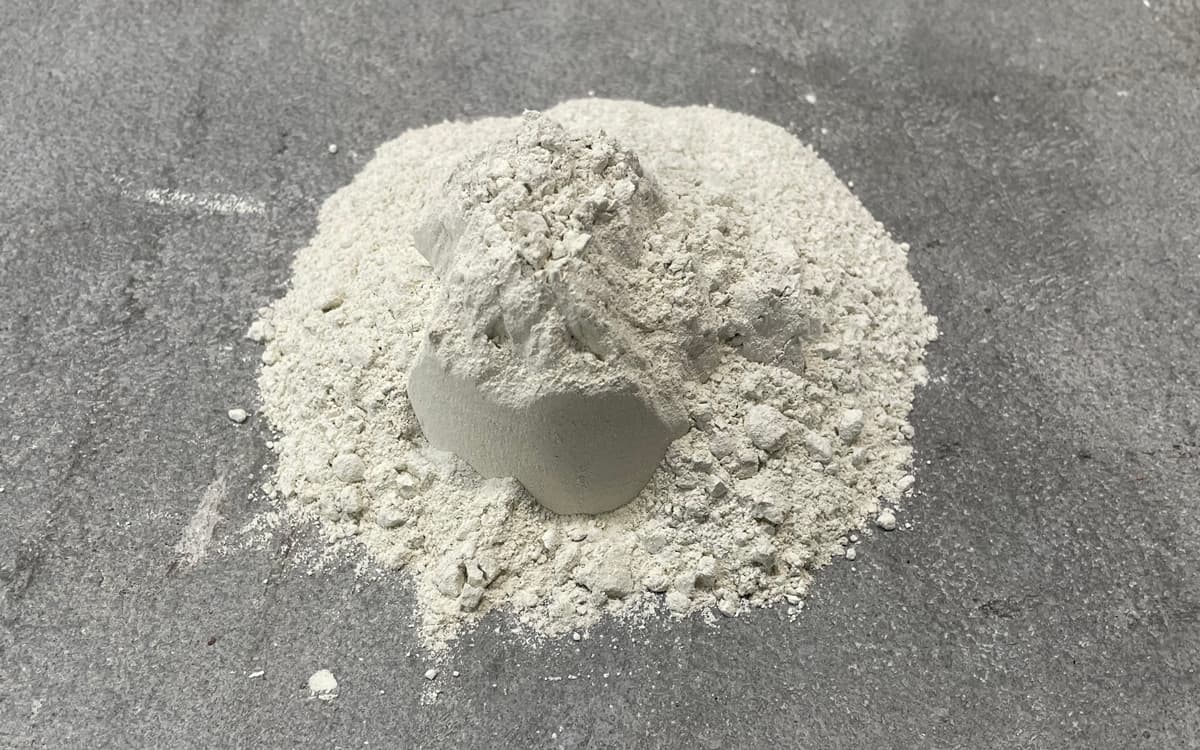
Bentonite has many applications worldwide, including skincare, food production, clarifying wine, paper, and kitty litter. However, for this article, we will focus on industrial applications.
Selecting the right bentonite option for your industrial application is not as simple as choosing the "best" bentonite. Working with an expert who has access to a range of suitable options will help you find the right product to achieve the properties you need.
I will cover some of Bentonite's critical properties and review how this compares to different options. Next, I will discuss the cost implications between options and examine the risk/benefit opportunities when working with bentonite.
The critical properties we look at when considering the best option include:
- Viscosity: the ability to create viscosity in water to assist cuttings in being transported under flow conditions
- Filtration control for borehole stability (when drilling or construction applications)
- Gel Strength: for cuttings suspension during static periods
The bentonite's quality (which depends on the degree of surface contamination of the bentonite) dictates how well the bentonite will deliver these critical functions.
Viscosity
Viscosity is the most misunderstood property of bentonite. People perceive the faster bentonite mixes and builds viscosity, the better product. Understanding how viscosity is generated is essential. High solids loading will create viscosity due to mechanical friction, detrimental to drilling fluid properties. Good quality sodium bentonite will produce viscosity due to electrochemical interaction between individual platelets, contributing to the fluid's ability to transport drill cuttings.
Viscosity is helpful in drilling (to a point). Enhanced viscosity aids in hole cleaning and can reduce the overall cost when we are trying to build a fluid to a given viscosity. Quality bentonite modified to achieve a high yield for hole cleaning will be less effective at providing filtration control than high-quality unmodified bentonite with a lower viscosity yield.
Filtration control
If you are piling or building a diaphragm wall, filtration control for stability is likely to be your number one priority. Sodium bentonite with a low yield but good filtration control will provide the best option. If using high yield bentonite, you are likely to want to pair it with a PAC style polymer to aid in the filtration control properties.
Gel strength for suspension
One of the core properties of bentonite, in particular sodium bentonite, is to deliver gel strength to aid in the suspension of cuttings. This is relevant in a vertical drilling application but particularly when working horizontally, such as HDD or tunnelling.
Calcium versus sodium
For industrial purposes, two main classes of bentonite are recognised: calcium and sodium bentonite. However, the properties above vary significantly related to each.
Calcium bentonite is widely available. However, the quality of these deposits varies widely. Some construction applications (such as filling a void) are likely only to need a very simple construction-grade bentonite. There are minimal worldwide deposits of sodium bentonite and none in the South Pacific. The largest deposits of sodium bentonite are in Wyoming in the US. When needing better properties of bentonite for more challenging drilling applications, such as HDD and water well, sodium bentonite will deliver significantly better properties.
Both calcium bentonite and sodium bentonite expand through water absorption (hydration). Calcium bentonite will absorb up to 2.8 times its volume of freshwater. Sodium bentonite will absorb far more, up to 8 times its volume of freshwater, meaning you require less product to achieve the same or better results than when using calcium bentonite.
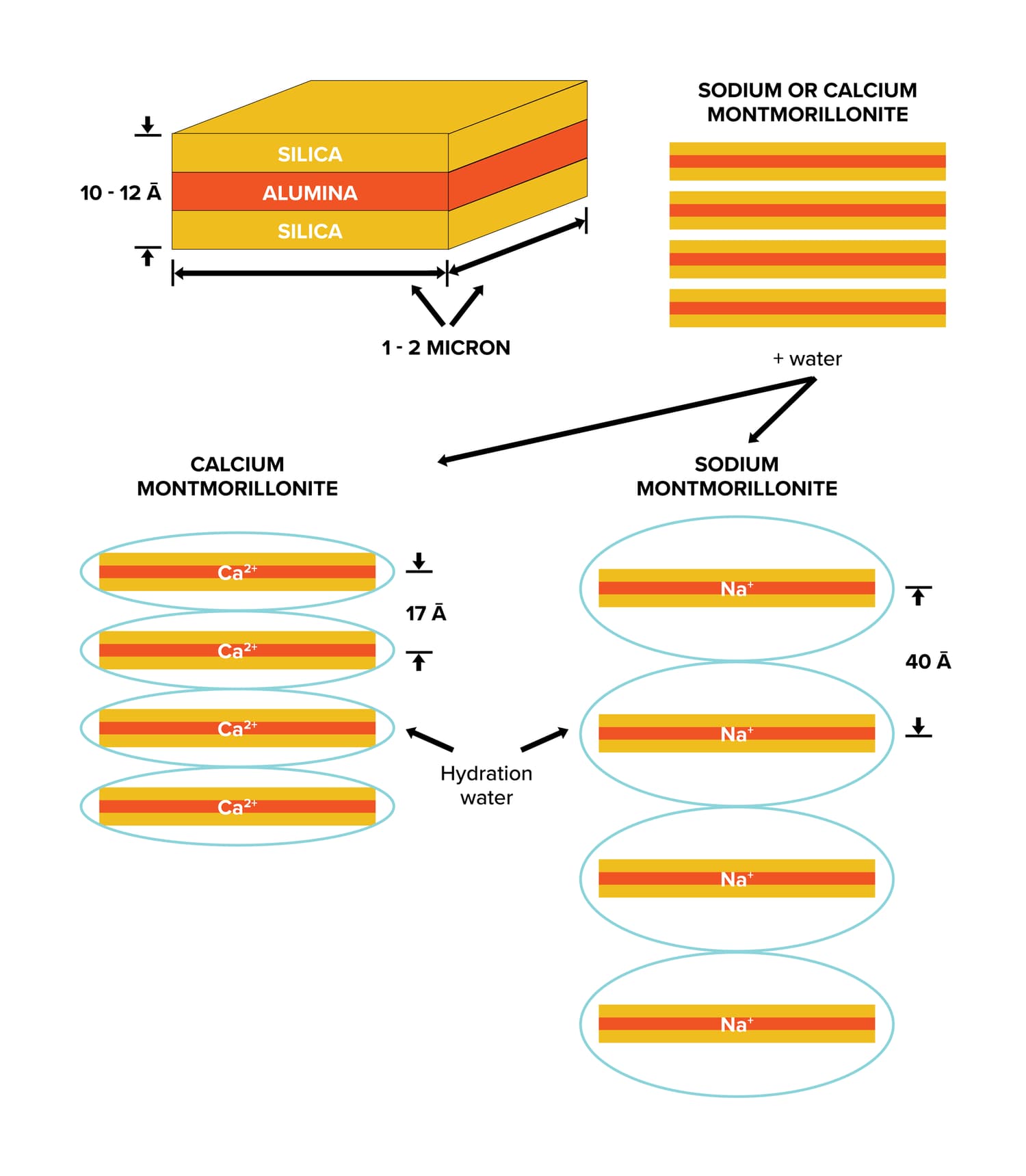
The classification as calcium or sodium bentonite is less important than how well the bentonite delivers the critical functions of viscosity, filtration control and gel strength in ways that are required to provide your specific outcome.
When it comes to drilling fluids and bentonite, the cost difference for equivalent quality products between one supplier and another will be small. When deciding on a product to use, finding a supplier who can provide technical support during design, project execution, and review is often worth more than the product itself.