A practical framework for using long-chain PHPA polymer as a bentonite alternative in foundation piling. Covers mixing, contamination, maintenance, concrete displacement, and how to stabilise a bored pile under fluid.
The Challenge
Engineers and contractors need confidence that pile load-carrying capacity is not adversely affected by slurry choice during construction, and that the approved slurry is not detrimental to structural capacity or pile life.
The Approach
A systematic approach using Swell Stop (Dry) PHPA polymer with soda ash water treatment, PAC polymer support in porous formations, and real-time viscosity, pH and sand content monitoring. Slurry level maintained two to three metres above the water table to maintain hydrostatic overbalance. Concrete displacement managed via tremie with piston pump to preserve polymer chain integrity.
The Outcome
Long-chain PHPA polymer maintains shaft stability with lower disposal costs, no filter cake skin friction risk, and a cleaner pile base for concrete placement. 'The cost between different providers is often tiny; the difference in technical advice and support available at design, through project execution, and during the review should be the primary factor.'
The Full Story
This document provides a framework for using long-chain PHPA polymer in foundation piling. It draws from articles and studies from the US and experience across New Zealand and Australia.
There are multiple PHPA polymers with differing levels of effectiveness related to their viscosity and mixing ability. A PAC polymer may be required to support a PHPA polymer when being run in porous formations to support the development of a filter cake and reduce the volume of fines in the column. This document is to support engineers and contractors, to enable them to be confident that the load-carrying capacity of the pile is not adversely affected during construction, and to ensure that an approved slurry is not detrimental to the structural capacity or life of the pile. I would encourage any engineers or contractors, to work in partnership with a company that specialises in providing technical support and advice, on the effective use of polymer in foundation piling.
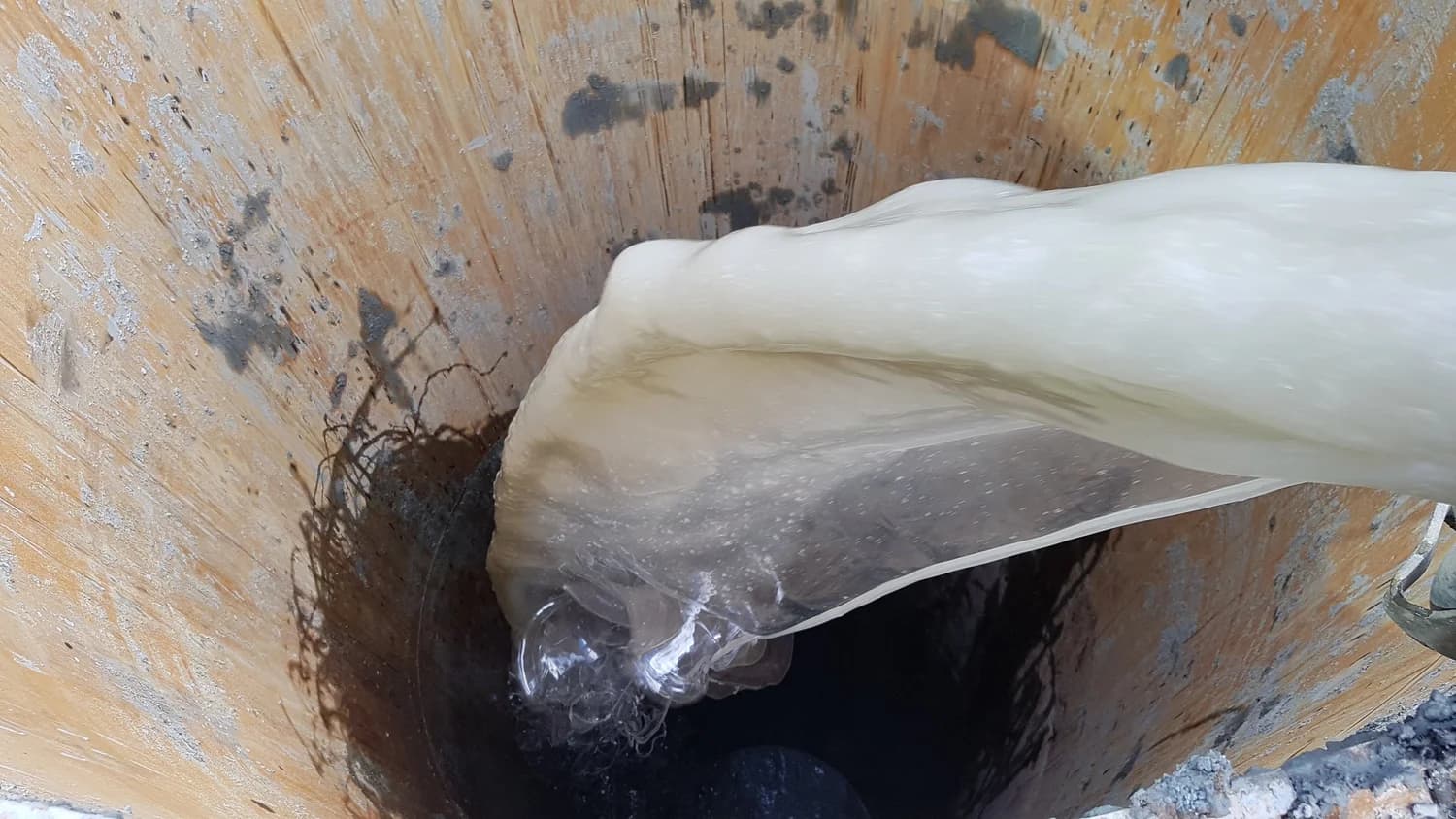
Advantages
- Highly concentrated; reduced chemical additions
- Requires less mixing/processing equipment than bentonite
- Reduces footprint on-site compared to bentonite
- A PHPA does not create a filter cake, so there is no risk of reduced skin friction
- Can reduce disposal costs
- The product is environmentally safe
- Cleaner pile (both base and sides) before a concrete pour
- Allows for a more uniform displacement to concrete
- Reduces chipping and cleaning of poured concrete
What is a PHPA polymer?
A PHPA polymer is a long-chain molecule with many simple molecules (monomers) linked together. It is mainly used in drilling applications to prevent clay hydrations and swelling. However, PHPA polymers also dramatically increase fluid viscosity, which is utilized to maintain open shaft stability.
When used in foundation piling, PHPA polymer reduces the fluid loss rate in the shaft through viscous drag. A reduced loss rate allows the level in the shaft to be maintained above the water table, creating a positive pressure differential to maintain borehole integrity.
The example PHPA polymer we refer to in this document is Swell Stop (Dry). It is water-soluble and is in 15kg pails. It can be broken down using Sodium Hypochlorite. The PAC polymers referred to are Filter High and Filter Low.
Mixing
Even with the best makeup water, we are not ready to create a suitable fluid. Soda Ash is used to adjust the pH and treat Calcium and Magnesium. For the best effect, we need a pH between 8.5 and 9.5.
Then Swell Stop (Dry) is added slowly through a venturi hopper. Swell Stop (Dry) dosage and the desired range of viscosity of the slurry will be designed by Blick to suit the formation. The initial mixing enables each polymer grain to get water-wet to initiate hydration to its full chain length.
The polymer slurry should be agitated until it sufficiently develops to be self-suspended using mechanical agitation.
Other products may be added to achieve desired properties, such as Filter High or Filter Low, depending on the formation. This begins with the Geotech site investigation. Documentation should be presented with soil logs and passed on to the contractor during the design stage.
Early contractor involvement at the test drilling stage is a significant advantage in determining relevant information.
Contaminants
Polymer slurries are sensitive to groundwater, soil, cement, and water contaminants. Calcium, magnesium, chlorine, and organic matter are some contaminants that will affect the polymer slurry. These contaminants often become part of the slurry from the soil or groundwater.
Maintenance
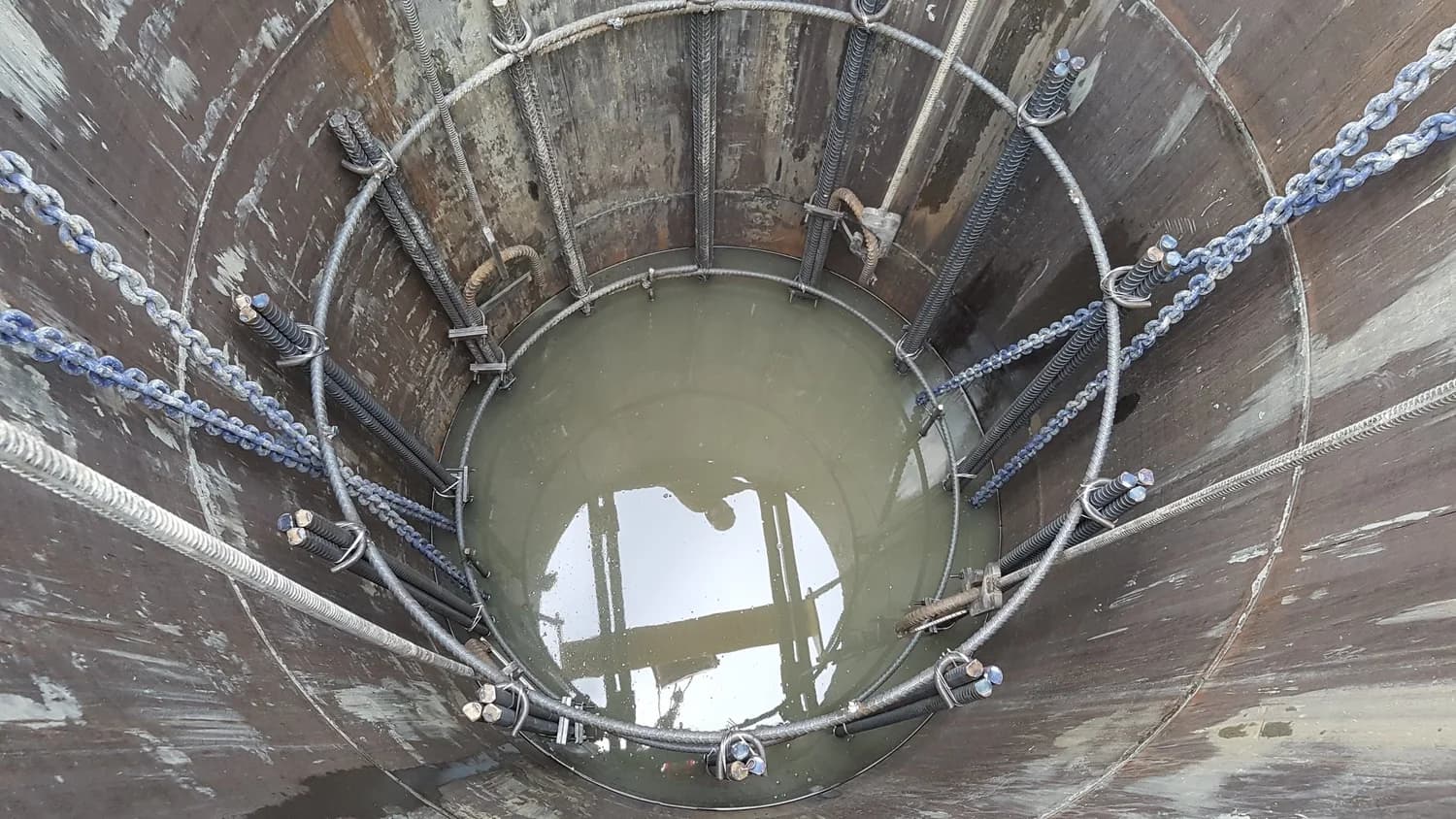
The slurry level should be maintained two to three meters above the water table to overbalance hydrostatic soil pore pressure and maintain soil stability. If the slurry drops below the specified level, the operation should be paused and the proper level re-established before proceeding. In some situations, we may recommend that the slurry be maintained at less than two meters above the water table to reduce the rates of fluid loss. It should be noted that PHPA polymers will shear degrade, resulting in reduced viscosity. Once hydrated, mechanical shear should be limited to prevent this.
Conclusion
A long-chain PHPA polymer is an effective method of stabilising a borehole in foundation piling. Having the right mixing equipment is vital. A great product is just the start. An experienced drilling fluids partner is vital to help at design, through execution and during project review.
More challenging ground conditions require a more complex mix of products to reduce risks, losses and collapses. When designing the job, Blick works closely with contractors, consultants, and councils to ensure the right solutions for a successful contract.
The cost between different providers is often tiny; the difference in technical advice and support available at design, through project execution, and during the review should be the primary factor in determining which provider to work with.